

Waterford · Ireland
What Makes a Great Conference or Town Hall?
Enda O’Doherty’s complete organiser’s handbook
Everything from the first honest conversation about why you’re doing this at all, through the seating plan and the sound desk, to whether anything was actually different thirty days later.
Download the full handbook (PDF) ↓ Free · no sign-up · print the templates
Why this handbook exists
Over the past decade I have spoken at hundreds of conferences, town halls and leadership events across Ireland, for AIB, Kerry Foods, TripAdvisor, Sanofi, Blackbaud and many others. I have also spent a great deal of time sitting in the audience at other people’s events, which is where most of what follows was actually learned.
What becomes clear from both vantage points is this. The difference between an event people are still quoting in November and one they have forgotten by Tuesday is rarely the quality of the content. It is the quality of the decisions made around it: the purpose it was built on, the way the day was paced, whether people could genuinely hear and see what was happening, and whether anything at all was designed to happen afterwards.
Those decisions are mostly made early, cheaply, and often by people doing this alongside a full-time job. Very little practical guidance exists for them. This handbook is written to close that gap.
It covers the full arc in twenty sections, with twenty printable templates and twenty-four diagrams: defining the purpose, understanding the audience, designing the experience, briefing speakers properly, holding attention across a long day, running the room itself, and measuring whether any of it actually worked. Where a figure is drawn from research it is sourced. Where it is my own judgement from the stage, I have said so.
Everything here is offered freely. Use it, print it, circulate it inside your organisation, and disagree with the parts you think are wrong.
Who wrote this
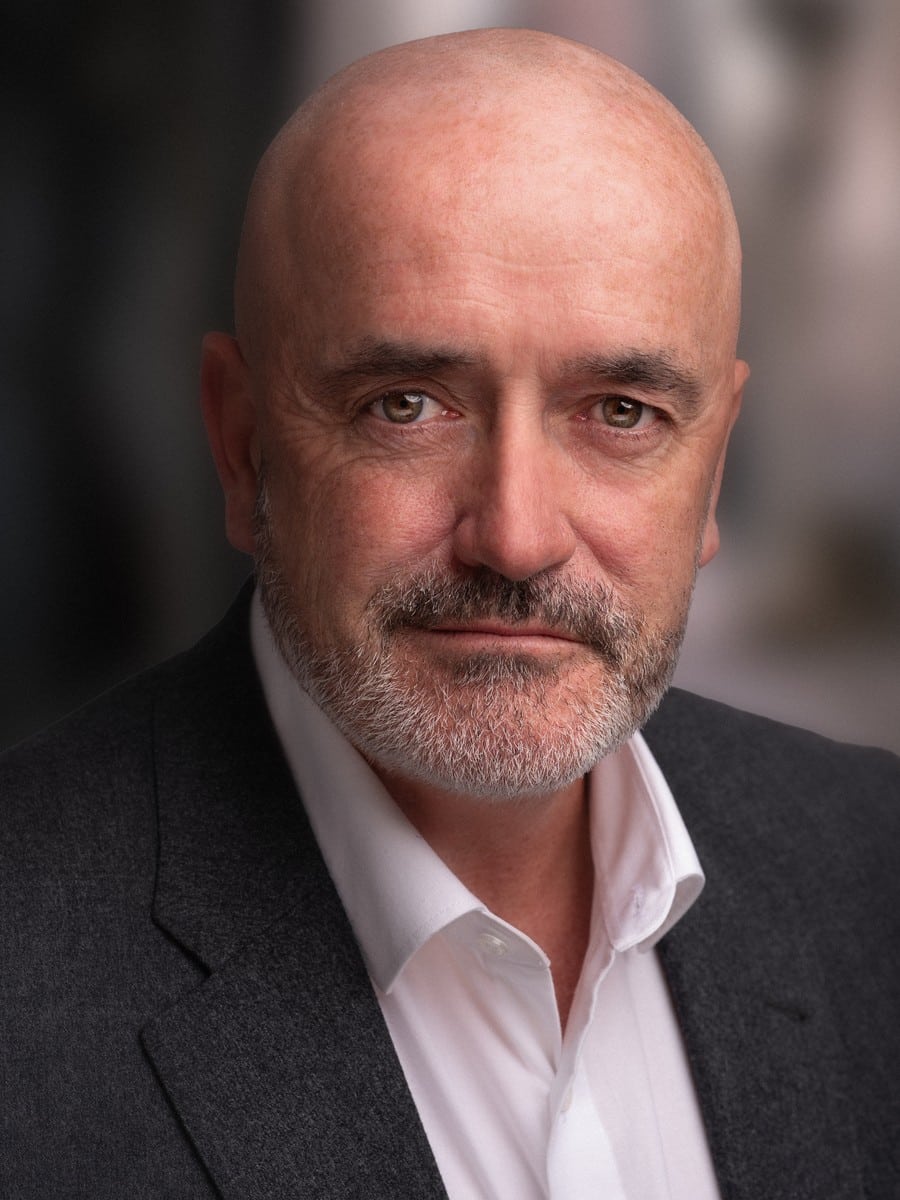
Enda O’Doherty is a corporate keynote speaker and endurance athlete from Waterford. He taught for nearly thirty years, and speaks on resilience, mental health, adversity and high-performance teams.
In 2015 he covered nine marathon distances in eight days, Belfast to Waterford, carrying a washing machine on his back for Pieta House. In 2017 he led an expedition for a mental health charity, carrying that washing machine two days above the clouds on Kilimanjaro.
Also heard and seen on RTÉ Radio 1, Virgin Media One and in The Irish Times.
Who this is for: anyone who has been handed a conference, an all-hands, a town hall or a leadership offsite and is now responsible for making it worth people’s time. HR, internal comms, L&D, EAs, marketing, or the person who happened to be in the room when it was decided. You do not need to be an events professional. You do need to make some decisions in the right order, and that’s what this is.
What’s in here
- Defining the purpose
- Understanding the audience
- Think → Feel → Do
- Designing the experience
- The opening ten minutes
- Leadership presentations
- The keynote speaker
- The science of attention
- Slides and visual communication
- Interaction and participation
- Storytelling
- Energy management
- Psychological safety
- Recognition and celebration
- The room: capacity and seating
- Sound, light and comfort
- Breaks, food and flow
- Accessibility and inclusion
- Measuring whether it worked
- The 30-day follow-up
- All 20 templates
- Sources and further reading
Purpose, People and Outcome
Everything expensive that goes wrong later is decided here, cheaply, in a room with four people and a whiteboard. This part is worth more than the rest of the handbook put together.
Defining the purpose
Ask most organisers what their conference is for and you get a theme. “Growth Together.” “Stronger 2027.” “One Team, One Vision.”
Those are not purposes. That’s wallpaper.
A purpose is a sentence with a verb in it, and a consequence if you fail. “We need four hundred people who currently think the restructure is being done to them to leave believing it is being done with them, and to be able to explain it to their own teams on Monday.” That’s a purpose. You can design against it. You can measure it. You can tell a speaker what you need.
Here’s the practical test I use. If you cannot finish this sentence without using the words journey, alignment or engagement, you don’t have a purpose yet:
“We are spending this money and taking these people out of the business for a day because ____________, and if it works, ____________ will be different.”
The ten reasons events actually get held
Almost every conference and town hall is doing at least one of these. The trouble starts when it’s quietly doing five, and nobody has ranked them.
| Purpose | What it demands of the design | Failure mode |
|---|---|---|
| Communicate strategy | Clarity over completeness. One argument, repeated. Time for questions, not just slides. | Death by roadmap |
| Align people | Shared experience and shared language. People need to hear each other, not just the stage. | Broadcast, no dialogue |
| Launch a new direction | Emotional lift plus practical detail. Both, or it’s either hype or homework. | Announcement with no “so what” |
| Build culture | Time together that isn’t scheduled. The corridor is the content. | Packed agenda, no air |
| Recognise achievement | Specificity. Named people, named things they did. | Generic thanks from the stage |
| Motivate | Honesty first, energy second. Motivation on top of a lie has a half-life of a day. | Rah-rah in a bad year |
| Educate | Practice, not exposure. And a plan for reinforcement afterwards. | Content firehose |
| Create connection | Structured, low-risk ways to talk. Not “there’s drinks at six.” | Networking left to chance |
| Drive behaviour change | One behaviour. Manager involvement. A 30-day plan built before the day. | Inspiration with no scaffolding |
| Address uncertainty or change | Candour, real Q&A, and someone senior willing to say “I don’t know yet.” | Scripted reassurance |
The purpose test for every item on the agenda
Once you have the sentence, you have a weapon. For every proposed session, ask: “if we cut this, what does the audience fail to understand or feel or do?”
If the honest answer is “nothing, but Finance always presents”, you have just found forty minutes to give back to the breaks. This is the single most useful question in conference planning and it makes you unpopular for about a week.
Conference Purpose Worksheet
Do this before anything else. Twenty minutes with the sponsor, in person, before a venue is booked.
Understanding the audience
Every organiser can tell you how many people are coming. Very few can tell you what those people currently believe.
That gap is where conferences die. You build a day for the audience you wish you had, curious, optimistic, up to speed, and then four hundred people walk in carrying last quarter’s redundancies, a commute, a laptop full of unanswered email and a well-earned suspicion that this is going to be another one of these.
You are not speaking to a room. You are speaking to four hundred private, ongoing arguments that were already in progress before you started.
The five questions that matter
Audience diagnostic
- Who are they, actually? Not headcount, roles, seniority mix, how long they’ve been here, how many are meeting each other for the first time, how many are remote and resent the travel.
- What do they already know? If half the room has heard the strategy three times and half have never heard it, you have two audiences and one stage. Decide which one you’re serving before someone else decides for you.
- What do they believe? This is the one nobody asks. What is the prevailing story in the canteen? What do they think this event is really for? If people believe an all-hands has been called to announce bad news, that belief is in the room whether it’s true or not.
- What are they worried about? Ask their managers. Ask three of them directly. Write the top three fears on a page and check that your agenda addresses at least one before lunch.
- What do you want them to think, feel and do differently? Which is the next section, because it deserves its own.
Segment the room honestly
Most audiences contain at least four distinct groups, and a session that works beautifully for one can actively alienate another.
| Segment | What they need | What kills them |
|---|---|---|
| The believers | Something new. Permission to go further. To be given a job. | Being sold what they already bought |
| The sceptics | Acknowledgement that the last initiative didn’t land. Evidence. Honest answers. | Unearned optimism from the stage |
| The tired | Relief. Recognition. A reason to care that costs them nothing extra. | Another ask on top of the pile |
| The new | Context. Who’s who. Language decoded. A way in socially. | Internal acronyms and in-jokes |
Audience Profile & Mapping
One per major audience segment. Photocopy it. If you can’t fill in “what they believe”, go and find out.
Think → Feel → Do
This is the most useful three words in the handbook, and the fastest way to improve a conference agenda without spending a euro.
For every single session, every keynote, every leadership slot, every breakout, every video, every award, three questions:
Why all three, and why in that order
THINK is the easy one. It’s the content. Every organisation is good at this and most stop here.
FEEL is the one that determines whether THINK survives the car park. Trust, energy, relief, urgency, belonging, being taken seriously. You cannot bolt this on with a video at the end. It comes from who speaks, how honestly they speak, and whether the room has been designed to let people feel anything at all.
DO is the one that gets left blank. And a DO is not “be more customer-focused.” A DO is specific enough that someone could observe whether it happened. “Every manager runs the three-question conversation with their team in the next fortnight.” That’s a DO.
The test: if a session cannot fill all three boxes, it is an email. Send the email, give the time back to the breaks, and watch the whole day improve.
Worked example
| Session | Think | Feel | Do |
|---|---|---|---|
| CEO strategy update | We are moving from three business units to two, and here is the logic in one sentence. | This was decided for reasons I can follow, by people who know it’s disruptive. | Be able to explain the change accurately to my own team on Monday. |
| External keynote | Resilience is a set of practices, not a personality trait. | Permission. Relief. That the thing I’ve been quietly struggling with is normal. | Take the self-assessment. Have one honest conversation this week. |
| Customer panel | Three specific things customers say we get wrong. | Uncomfortable, in a productive way. Not defensive. | Bring one of the three to my next team meeting. |
| Awards segment | These are the behaviours we actually value, demonstrated. | Seen. That effort here gets noticed by name. | Nominate someone in my own team this quarter. |
Think · Feel · Do Planner
One row per session. Send the completed row to the speaker, it is the single most useful thing a speaker can receive.
Designing the experience
An agenda is a list of things that will happen. An experience is a plan for how the room will feel across seven hours. Almost every conference has the first. Very few have the second.
The audience is on a journey whether you design one or not. They arrive in some state, they pass through a sequence of rooms and moods and queues, and they leave in some other state. Your only real choice is whether that journey is intentional.
The twelve moments
Every event, however simple, moves through these. Write a name beside each one, the person responsible. Any moment with no name is a moment left to chance.
| Moment | What it’s really doing | Where it usually goes wrong |
|---|---|---|
| Before | Setting expectation, seeding curiosity, reducing anxiety about the practicalities | A calendar invite with a venue address and nothing else |
| Arrival | First impression. Am I welcome? Is this organised? Do I belong here? | One queue, one badge printer, nobody making eye contact |
| Opening | Setting tone, permission and relevance for the entire day | Housekeeping, fire exits, and a slide of the agenda |
| Energy building | Getting the room from “audience” to “participants” | Skipped entirely; assumed to happen by itself |
| Keynote | The shared reference point everyone can quote in the taxi | Booked last, scheduled worst |
| Leadership | Credibility, candour, direction | Sixty slides read aloud |
| Breaks | Physiological recovery and the conversations that justify attendance | Fifteen minutes for three hundred people and four toilets |
| Interaction | Turning listening into thinking | “Any questions?” into silence |
| Stories | Making abstract strategy concrete and memorable | Replaced by a case study slide |
| Workshops | Practice. The only part where people do rather than hear | Too short, no output, no follow-through |
| Recognition | Demonstrating what the organisation actually values | Generic, rushed, or squeezed by an overrun |
| Close | The line people carry out the door | 4.45pm, half the room watching the car park |
Conference Journey Map
Score each moment 1 to 5 for expected audience energy. Then fix the troughs before they happen, rather than apologising for them afterwards.
| Moment | Energy 1-5 | What the audience is thinking here | The fix, and who owns it |
|---|---|---|---|
| Before / invite | |||
| Arrival & registration | |||
| Opening 10 minutes | |||
| Leadership session | |||
| Mid-morning break | |||
| Keynote | |||
| Lunch | |||
| Post-lunch (14:00-16:00) | |||
| Workshop / interaction | |||
| Recognition | |||
| Close | |||
| Week 1-2 follow-up |
What Happens On Stage
The opening, the leaders, the keynote, the slides and the questions. This is the part everyone thinks the conference is, and it’s still only about a third of what decides whether it works.
The opening ten minutes
The room decides very early. Not consciously, and not fairly, but it decides. Within about ten minutes people have formed a view on three things: is this organised, is this honest, and is this going to be worth my day?
And here is what almost every conference in Ireland does with those ten minutes: fire exits, phone etiquette, the wifi password, a slide of the agenda, and a welcome from somebody reading a script somebody else wrote.
You spend fifty thousand euro on a day and give away the ten most valuable minutes of it to housekeeping.
What the opening actually has to do
Four jobs, in this order
- Establish relevance immediately. Within ninety seconds, someone in the room should think “this is about me.” Not about the company. About them.
- Set the emotional temperature. If it’s a hard year, name it in the first two minutes. If you don’t, everything afterwards sounds like it’s being said by someone who hasn’t noticed.
- Give permission. Tell people what kind of day this is. “You will be asked to talk to the person beside you. There will be time for real questions and we will answer them.” People behave the way you tell them they’re allowed to behave.
- Create a little energy. Not forced fun. Movement, laughter, or a moment of genuine surprise. Something that changes the physical state of the room from “seated audience” to “people who are here.”
What works
- Start on time. Exactly on time. It is the cheapest credibility you will ever buy, and starting eight minutes late tells four hundred people that their time is the flexible ingredient.
- Open with something concrete. A number, a customer’s actual words, a photograph, a thirty-second story. Not a welcome.
- Name the elephant. “I know the last twelve months have been hard, and I know some of you are here wondering whether today is going to acknowledge that. It is.”
- Get people talking to each other inside the first ten minutes. Ninety seconds, in pairs, one question. It changes the acoustics of the room for the rest of the day, literally. A room that has spoken is a room that will ask questions later.
- Say what the day is for, in the purpose sentence you wrote in Section 1. Out loud. In plain language.
- Tell them how it ends. “By four o’clock you’ll have three things to take back to your team.” People relax when they know the shape.
What fails
- Housekeeping first. Move it. Put it after the opening, or into the pre-event email, or on a slide during the first break. Nobody has ever been unable to find a fire exit.
- The agenda slide. They have the agenda. Reading it aloud is not an opening, it’s a stall.
- Corporate waffle. “As we continue on our transformation journey towards becoming a truly customer-centric organisation…” People have heard this sentence. They know it means nothing. Every one of these costs you credibility you’ll want later.
- A video with no sound. Ninety seconds of someone crouching at a laptop and the room is gone. If you open with video, it has been tested on the show laptop, with audio, that morning.
- Thanking the committee. Do it at the end. Nobody has ever been energised by a list of names at 9.02am.
- Apologising. “Sorry, we’re running a bit behind, and the microphone’s playing up, and unfortunately Sarah couldn’t make it…” You have now told the room this is a shambles before anything has happened.
The Opening 10 Minutes Planner
Plan this minute by minute. It is the only part of the day that deserves that level of detail.
| Minute | What happens | Purpose, what it does to the room | Who |
|---|---|---|---|
| −10 to 0 | Room walk-in: music, screen state, lighting, who greets | ||
| 0:00-0:30 | The hook, concrete, specific, not a welcome | ||
| 0:30-2:00 | Relevance: why this, why now, why you | ||
| 2:00-3:30 | Name the elephant / set emotional temperature | ||
| 3:30-5:00 | The purpose sentence, said out loud | ||
| 5:00-7:00 | Permission & shape of the day | ||
| 7:00-9:00 | First interaction, 90 seconds, in pairs | ||
| 9:00-10:00 | Hand over with momentum |
Leadership presentations
Most senior leaders are considerably better in conversation than they are on a stage, and the standard corporate conference is designed to showcase the version of them that is worse.
Give a capable CEO forty slides and twenty-five minutes and you will get a person reading. Give the same CEO a chair, an interviewer and eight prepared questions and you’ll get somebody the room actually believes.
How to communicate strategy without drowning people
The rules that hold
- One argument, three supports. Not seven pillars. Not a wheel diagram with nine segments. One sentence that a delegate could repeat accurately in the car park, and three reasons it’s true.
- Lead with the decision, not the journey to it. Executives love to walk the room through the analysis. The room wants to know what was decided and what it means for them, and will happily take the analysis afterwards.
- Translate everything into “what this means for you.” Every strategic point needs a second sentence beginning with those words. If the leader can’t write that sentence, the point isn’t ready.
- Numbers need one comparison. “€47 million” means nothing. “€47 million, up from €31 million, and the first time we’ve beaten the UK business” means something.
- Fewer slides than you think, bigger than you think. See Section 9.
Using stories properly
The most powerful thing a senior leader can do on a stage is tell one specific, slightly uncomfortable story about themselves. Not a triumph. A moment where they got it wrong, or didn’t know, or were frightened, and what they did next.
It works because it does something no slide can: it establishes that the person on stage is a person. Everything they say afterwards is heard differently. See Section 11 for the structure.
Communicating difficult messages
The principles below apply to any hard message a leader has to deliver from a stage:
- Bad news first, and unhedged. Burying it in the middle after twenty minutes of context reads as manipulation, and people are extremely good at detecting the shape of an approaching announcement.
- Say the actual word. “Redundancies,” not “a reduction in force.” “We lost the contract,” not “a change in the client landscape.” Euphemism is the fastest way to lose a room.
- Explain the reasoning, and be honest about what was hard. People can accept a decision they dislike far more easily than one that appears arbitrary.
- Say what you don’t know, and when you will. “I don’t have the answer to that yet, and I’ll have it by the 14th” is a hundred times stronger than a confident non-answer.
- Do not follow bad news with a motivational video. Ever.
Authenticity, without the poster
Authenticity has been used so heavily in corporate life that it’s become almost meaningless. In practice, on a stage, it comes down to something quite specific and testable: is this person saying anything that costs them something to say?
If everything a leader says is safe, polished and upside-only, the room concludes, correctly, that they are being managed. One admission of difficulty buys more trust than an hour of confidence.
The confidence paradox. Leaders often worry that admitting difficulty will undermine confidence. In practice the opposite happens. Confidence built on obvious omission is brittle, the moment reality contradicts it, everything else the leader said becomes suspect. Confidence built on “here’s what’s hard, here’s what we’re doing, here’s what I need from you” survives contact with a bad quarter.
The keynote speaker
I should declare an interest here: this is what I do for a living. So I will be as straight as I can about my own trade.
There is a version of the external keynote that is entertainment. It’s a good story, well told, the room enjoys it, everyone claps, and by Wednesday it has evaporated completely. It is not worthless, a room that has laughed together is a better room, but if that’s all you got, you overpaid.
Then there’s the version that’s actually worth the fee. And the difference is almost entirely down to two things: whether the speaker was briefed properly, and whether anything was designed to happen afterwards. Both of those are your job, not the speaker’s.
What makes an external speaker genuinely valuable
| Quality | What good looks like | How to test it before you book |
|---|---|---|
| Relevance | Speaks to your people’s actual situation, in their language, referencing their world | Ask: “what would you change about this talk for us?” Vague answer = off-the-shelf |
| Credibility | Has genuinely done the thing, or genuinely studied it. Skin in the game. | Ask what they got wrong, and what it cost them |
| Storytelling | Specific scenes, not summaries. You can see it. | Ten minutes of unedited video, not a showreel |
| Humour | Arises from the material and from self-deprecation, not from bits | Does the audience laugh in the unedited footage, or just the showreel? |
| Emotion | Earns it. Doesn’t manufacture it, and doesn’t leave people stranded in it | Ask how they land the room afterwards |
| Energy | Real, not performed. You can hear the difference in a phone call. | Have the call. Always have the call. |
| Practical takeaway | Something a delegate can do on Tuesday without permission or budget | “What are the three things people do differently after hearing you?” |
| Participation | Gets the room doing something, appropriate to your culture | Ask what they’ll ask the audience to do, and veto anything that would horrify your people |
| Memorability | One image or phrase that survives six months | Ask past clients what people still quote |
| Connection to objectives | Willing to read your purpose sentence and build toward it | Send them Template 03 and see what comes back |
The twelve questions to ask before you book anyone
- What would you change about this talk for our audience specifically?
- Can I see ten minutes of unedited footage, not a showreel?
- Will you speak to our people, or will you deliver your talk?
- What do you need from us to be at your best?
- What are the three things people do differently after hearing you?
- Tell me about a time it didn’t work. What happened, and what did you change?
- What will you ask the audience to do during the session?
- Can you talk to two clients who booked you for something like this?
- What happens after the talk, do you offer anything, and is it included?
- How much preparation time will you spend on us, and what does that look like?
- What’s your position on being recorded and on us using clips afterwards?
- What would make you turn this booking down?
Briefing a speaker properly
Here is the honest truth from the other side of the transaction: most speaker briefs are a calendar invite, a venue address and a running order. That’s it. And then organisers are disappointed when the talk feels generic.
The best brief I’ve ever received was two pages. It told me who was in the room, what had happened in the business in the previous eighteen months, what people were angry about, what the CEO was going to say immediately before me, three things I should not mention, and one sentence describing what a win looked like. I rewrote a third of my talk. It was the best session I did that year, and it took that organiser about forty minutes.
Forty minutes of briefing is worth more than four thousand euro of fee. If a speaker won’t engage with a proper brief, that tells you what you’re buying. And if you won’t write one, you’ve capped what any speaker can do for you.
Speaker Brief
Send this to every speaker, internal and external, at least four weeks out. A speaker who arrives briefed is a different speaker.
Looking after speakers on the day
Small things, and every one of them affects the quality of what the room gets:
- Somewhere to be beforehand that isn’t the audience. Not a corridor. Not the coffee queue. Twenty quiet minutes before going on is the difference between a good talk and a great one.
- Water on stage, at room temperature, opened. Sparkling water before a fifty-minute talk is an act of hostility.
- A countdown clock the speaker can see. Not a person waving. A clock.
- Tell them honestly if you’re running late and by how much, before they go on, not in a whisper at the lectern.
- Brief them on the room’s mood. If the session before was heavy, say so. It changes how a good speaker opens.
- Introduce them properly and briefly. Ninety seconds maximum, and never read their whole biography, you’re spending the room’s attention on your credibility rather than theirs.
The science of attention
A conference can have brilliant content and still fail, because at some point people quietly stopped listening and nobody on stage noticed.
Before we get to what works, let me clear out two statistics that are almost certainly in someone’s slide deck for your event right now. Both are false, and both are quoted constantly.
“Humans now have an attention span of eight seconds, shorter than a goldfish.”
Fabricated. Traced back, it came from an SEO website presenting itself as a research institution. Its cited sources were an analytics report about 25 people leaving websites in 2008, and a second source which told reporters the claim was false. Microsoft, which had repeated it, removed the report. (Forbes, 2023; Temple University Beasley School of Law, 2024)
“Only 10% of training transfers to the job.”
Also fabricated. It comes from a 1982 trade article where the author posed it as a rhetorical question, “how many times have you heard training directors say…”, with no data behind it whatsoever. It has been cited as fact in business cases for forty years. (Fitzpatrick, Work-Learning Research)
And the one everyone believes about lecture length
The “audiences can only concentrate for ten to fifteen minutes” rule has no evidential basis either. Reviewers went looking at the studies underneath it and found them insufficient. Bradbury’s 2016 review in Advances in Physiology Education noted that the most frequently cited source on the matter “barely discusses student attention at all”, and reached the conclusion every conference organiser should have somewhere visible:
“The greatest variability in student attention arises from differences between teachers and not from the teaching format itself.”
Bradbury, N.A. (2016), Advances in Physiology Education 40(4)
Which means: the format is not your problem. The person is. A brilliant speaker holds a room for fifty minutes. A poor one loses it in six, and no amount of interactive breakout design will rescue them.
What the evidence does show
Bunce and colleagues measured attention during lectures using clickers and found something more useful than a cliff-edge. Attention lapses are frequent and brief, students reported lapses of a minute or less more often than long ones, and engagement “alternates between attention and non-attention in shorter and shorter cycles as the lecture proceeds.”
Critically: interactive elements such as clicker questions and demonstrations produced significantly lower attention decline, and “this effect persisted during lectures immediately following the intervening pedagogies.” (Bunce, Flens & Neiles, Journal of Chemical Education, 2010)
In other words: an interruption doesn’t just create a good five minutes. It buys back the segment afterwards.
Cognitive overload, the real enemy
Attention isn’t usually lost because people are bored. It’s lost because they’re full.
Working memory is small. When a slide is dense, an accent is unfamiliar, the acoustics are poor and the concept is new, people are spending capacity on decoding rather than understanding, and there is nothing left for the actual point. Every friction you remove gives capacity back.
The nine levers for holding a room
- Variety, change voice, format or posture at least every 45 minutes. Not because attention expires on a timer, but because variation regenerates it.
- Storytelling, narrative is processed differently from information. It’s the cheapest compression algorithm we have.
- Visual communication, one idea per slide, big. See Section 9.
- Participation, even ninety seconds of talking to a neighbour changes the state of the room.
- Movement, get people out of the chair. Standing changes physiology, not just mood.
- Questions, asking the room a question they answer silently in their own head still works. It converts listening into thinking.
- Breaks, real ones, long enough to actually be breaks. See Section 17.
- Energy management, design the arc deliberately. See Section 12.
- Remove friction, sound, sightlines, temperature, air. All of Part Three. Every one of these is stealing capacity from your content.
Slides and visual communication
Nobody in the history of business has ever said “that was a great presentation, and I particularly enjoyed slide fourteen.”
Slides are not the presentation. They are a visual aid to a person talking. The moment a slide contains everything the speaker is going to say, one of the two becomes redundant, and it isn’t the slide that people stop paying attention to, it’s the human.
The rules worth enforcing
| Rule | Why | In practice |
|---|---|---|
| One message per slide | If a slide has three points, the audience picks one and misses two. You don’t get to choose which. | Split it. Slides are free. |
| Text no smaller than 30pt | Treat as a floor, not a target. Anything smaller is a handout being displayed. | If it doesn’t fit at 30pt, it’s a document |
| Images over text where the point is emotional | A photograph of the actual customer beats the words “customer-centric” every time | Real photos, not stock. People can tell. |
| One chart, one message, one highlight | A chart showing everything shows nothing. Highlight the bar you’re talking about; grey the rest. | Say the takeaway in the title |
| Data: the number and one comparison | Absolute figures are meaningless without an anchor | “€47m, up from €31m” |
| Video: tested, with sound, on the show laptop | This is where conferences go to die | Test it that morning. Every time. |
| Fonts: one family, two weights | Anything else reads as amateur at scale | Sans-serif. Big. Boring is fine. |
| Animation: build only, no motion | Reveals help sequencing. Spinning transitions cost you credibility. | Fade or appear. Nothing else. |
| Branding: small, corner, once | The logo on every slide is a tax on the content area that nobody notices anyway | Title slide and close. Done. |
What to remove from a presentation
- The agenda slide (and the “where we are now” agenda slide that reappears four times)
- The org chart, unless someone will genuinely need it
- Any slide whose title is a noun rather than a statement, “Q3 Performance” tells you nothing; “Q3 beat plan on volume, missed on margin” tells you everything
- Every slide the speaker will skip past saying “I won’t dwell on this”
- The thank-you slide with the stock photo of a sunrise
- Anything the speaker plans to introduce with “I know you can’t read this at the back”
Presentation Quality Checklist
Send to every presenter with the speaker brief. Ask them to tick it before submitting their deck.
Structure
- There is ONE argument, stated in one sentence
- The audience knows within 90 seconds why this matters to them
- Every slide title is a statement, not a noun
- THINK / FEEL / DO are all answerable
- The close is written word for word
- Deck runs at least 10% under the slot time
Content
- One message per slide
- Every number has a comparison
- At least one specific story with a named person
- Jargon and acronyms removed or defined
- Nothing here that could have been an email
Visual
- No body text below 30pt
- Passes the six-second test
- Charts: one message, one highlight, rest greyed
- Contrast checked at real house-light levels
- No pale grey on white
- Images are real, not stock
- One font family, two weights maximum
- Builds only, no motion transitions
Technical
- Tested on the actual show laptop
- Embedded video tested WITH audio
- Fonts embedded or standard
- Aspect ratio matches the screen (16:9)
- Submitted by the deadline
Interaction and participation
The default state of a conference audience is passive, and passivity is comfortable. People will happily sit for six hours absorbing nothing at all, and give you an 8.2 out of 10 for the venue.
Interaction isn’t about making people uncomfortable or forcing them to share feelings with a stranger. It’s about the fact that listening and thinking are different activities, and only one of them changes anything.
The ladder, lowest risk to highest
| Format | What it costs the audience | Best used |
|---|---|---|
| Silent question | Nothing. “Think of the last time you…” | Any room, any culture, any time. Free. |
| Show of hands | Almost nothing, and it tells the room about itself | Early, to establish that participation is normal |
| Live polling | Anonymous, low risk, generates real data | When you want honest answers to an awkward question |
| Turn to your neighbour | 90 seconds, one question, no reporting back | The workhorse. Use it three times a day. |
| Table discussion | 5-10 minutes, needs a clear question and a timer | Cabaret rooms, after a provocative input |
| Table exercise with output | 15-30 minutes, needs materials and a capture method | When you’ll actually use what they produce |
| Reflection & writing | Individual, quiet, surprisingly powerful | Before a close, to convert intention into commitment |
| Open Q&A | High social risk for the asker. See Section 13. | Only with roving mics and a way in for the nervous |
| Audience challenge | Highest risk. Someone comes on stage. | Only if you know the room and have a volunteer briefed |
Making Q&A actually work
- Roving mics and named runners. “Just shout it out, I’ll repeat it” loses the back third of the room and makes the recording useless.
- Take questions anonymously as well as live. A simple digital tool, or index cards at the tables. The best question of the day is almost always one somebody wasn’t willing to put their name to.
- Have a planted opener. Not a fake question, a real one, from someone briefed to go first. The first question is the hardest and someone has to break the seal.
- Answer the hardest one first. It buys you credibility for everything after it. Ducking it costs you the rest of the session.
- Never say “great question.” You’ve now graded the questions, and everyone whose question didn’t get that response noticed.
- Repeat the question before answering. For the room, for the recording, and to make sure you’ve understood it.
Audience Engagement Planner
Map every interaction across the day. If there are fewer than four, the day is a broadcast.
| Time | Interaction | Risk level | The exact question being asked | Who runs it |
|---|---|---|---|---|
Storytelling
Every organisation has extraordinary stories in it and presents almost none of them. Instead it presents case studies, which are stories with everything interesting surgically removed.
The difference is simple: a case study tells you what happened and that it worked. A story tells you what was at stake, what nearly went wrong, and what somebody chose to do about it.
The five beats
Situation → Challenge → Choice → Consequence → Lesson
- Situation. Where we were. Specific and short. A time, a place, a person. “March 2024. Three of us in a meeting room in Sandyford at half seven in the evening.”
- Challenge. What went wrong, or what was at risk. This is where most corporate storytelling gets sanitised. Don’t sanitise it, the challenge is what makes the rest matter.
- Choice. The hinge. What we decided, and what we gave up to decide it. A story without a real choice is just a sequence of events.
- Consequence. What actually happened, including the parts that didn’t work.
- Lesson. What this means for the people listening. One sentence. Don’t over-explain it; audiences resent having the moral spelled out.
Turning corporate information into something people remember
| The corporate version | The version people remember |
|---|---|
| “We improved our customer response times by 34% following a process redesign.” | “A customer in Cork waited eleven days for a callback about a broken meter. Her name was Nuala. Here’s what we found when we went looking for why.” |
| “Safety is our number one priority.” | “On the 14th of April, Gerry stopped a job because something didn’t look right. It cost us four hours. Here’s what would have happened if he hadn’t.” |
| “We are committed to employee wellbeing.” | “Last year one of our managers told me they’d been coming in every day for six months without telling anyone how bad things were. This is what we changed, and it isn’t enough yet.” |
Storytelling Planner
One per story. Give it to any leader who is presenting. It is the highest-return prep you can do.
Energy management
You cannot expect five hundred people to sit for six hours and remain equally engaged. That isn’t a motivation problem or a content problem. It’s physiology, and it is entirely predictable, which means it is entirely designable.
The post-lunch dip is real, and it is not the sandwiches
Everyone jokes about the graveyard slot. Almost nobody plans for it. And the research is more specific, and more useful, than the folklore.
Zhou et al., Frontiers in Public Health, 2021
Derengowski et al., Lighting Research & Technology, 2025
What actually works after lunch
- Raise the lights. Do not dim them. Every instinct says lower the house lights so the slides pop. Resist it. In controlled testing, bright blue-enriched light from 2pm significantly reduced negative mood and subjective sleepiness and improved working memory accuracy. That was a lab with sleep-deprived participants rather than a ballroom, but the direction is clear and the intervention is free.
- Light from above, not below. This is the genuinely non-obvious one. All that moody perimeter uplighting is beautiful in the event photography and sedating for the humans sitting in it.
- Movement. Brief activity breaks reduce fatigue. Two minutes, standing, turn to the person beside you, one question. That’s the whole intervention.
- Put your best speaker here. Not at 9am.
The graveyard slot is not where you bury the boring bit. It is where you spend your best asset.
The 9am slot has adrenaline doing half the work for you. Everyone is caffeinated and slightly nervous and the room has energy it did not earn. The 2.15pm slot has none of that. If you put your weakest item there because “nobody’s really listening anyway”, you have written off a quarter of your day, and taught your people that the afternoon is optional.
The nine variables you can pull
When the energy map (Template 10) shows a trough, these are your levers. Use two or three, not all nine.
| Lever | How to use it | Best deployed |
|---|---|---|
| Content | Move from abstract to concrete. A customer story beats a strategy slide when energy is low. | Any trough |
| Speaker | Change the voice. Even a five-minute internal contribution resets the room. | After 40+ minutes of one person |
| Format | Lightning talks, 5-7 minutes each, blocks of four or five. | Excellent at 2.30pm |
| Movement | Stand, turn, talk, sit. Two minutes. | 2pm, and after any long session |
| Humour | Cannot be scheduled, but can be recruited, book someone who has it. | Mid-afternoon |
| Interaction | Table discussion with a timer and a real question. | When you need thinking, not listening |
| Music | Walk-in, walk-out, and returning from breaks. Costs nothing, changes everything. | Every transition |
| Breaks | A real one. See Section 17 for why 15 minutes isn’t one. | Every 90 minutes maximum |
| Emotion | Recognition, a personal story, a genuine thank-you by name. | Before the close |
The Energy Curve
Score each slot 1 to 5 for expected audience energy, honestly, as if you were sitting in it. Then fix every trough before it happens.
| Time | Session | Energy 1-5 | If it’s a trough: which levers, and who owns the fix? |
|---|---|---|---|
| 09:00 | |||
| 10:00 | |||
| 11:00 | |||
| 12:00 | |||
| 13:00 lunch | |||
| 14:00 ⚠ | |||
| 15:00 ⚠ | |||
| 16:00 | |||
| 17:00 |
Psychological safety
Every organiser has watched it happen. The leader says “any questions?”, scans a room of four hundred people, waits four seconds, says “no? great, let’s move on”, and the meeting ends with the actual question unasked.
That silence is almost never agreement. It’s a calculation.
What people are actually calculating
Asking a question in front of four hundred colleagues and the entire executive team carries real, rational risk. Will I look stupid? Will I look disloyal? Will this be remembered at my next review? Is this a career-limiting thirty seconds?
Nobody weighs those risks and thinks “but the organisation values open dialogue.” They think about their mortgage.
Psychological safety is not a value you announce. It is a set of costs you lower.
The practical levers
Lowering the cost of speaking up
- Provide an anonymous channel and use it visibly. Read out a genuinely hard anonymous question, on stage, and answer it properly. You have just demonstrated more about the culture than any slide could.
- Have a planted first question. Real, from a briefed person. Somebody has to break the seal, and it should not have to be the bravest person in the room.
- Answer the hardest one first. The room is watching to see what happens to the person who asks something awkward.
- Never punish the asker, even mildly. A defensive answer, a flash of irritation, a “well, that’s a slightly loaded question”, the whole room logs it and nobody asks again for two years.
- Have the leader model it. “I got this wrong last year.” “I don’t know.” “That’s a fair challenge and I hadn’t thought about it that way.” Safety flows downhill from whoever has the most power in the room.
- Use table discussion before Q&A. A question that has been agreed by six people at a table is far easier to ask than a personal one, and you’ll get better questions.
- Thank people specifically, afterwards, for hard questions. Privately is fine. Publicly is better.
- Follow up on what you promised. Nothing kills future participation faster than a question that got a promise and then nothing.
Recognition and celebration
Recognition segments are where conferences most often become embarrassing, and it is almost always the same failure: the recognition is generic.
“I want to thank the whole team for their incredible hard work this year” recognises nobody. Everyone in the room knows it costs nothing to say and applies to everyone equally, which means it applies to no one.
What makes recognition land
Six rules
- Name the person, and name the thing. Not “our operations team.” “Marie in Athlone, who stayed until nine on the 3rd of December because a customer’s system was down and she wasn’t going to leave it until morning.”
- Describe the behaviour, not the outcome. Outcomes are often luck. Behaviours are choices, and recognising a behaviour tells the room what to do.
- Make the connection to values explicit but light. If you’ve described the behaviour well, everyone can see which value it is. Say it once; don’t lecture.
- Have the person’s own manager tell it, not HR. The story is better because they were there.
- Warn people in advance. Being surprised on stage in front of four hundred colleagues is a nightmare for a good proportion of people. Ask.
- Protect the slot. Recognition squeezed by an overrun is worse than no recognition at all, you’ve told people exactly where it ranks.
Beyond awards
- Team achievements told as stories, three minutes, using the five beats from Section 11, told by someone who was there.
- Milestones, service anniversaries, qualifications, returns from leave. Cheap, and disproportionately meaningful.
- Peer recognition, collect nominations in advance and read a selection. What people notice about each other is often better than what management notices.
- The quiet contributors, every organisation has people who hold things together and never appear in a results slide. Finding one and naming them well is often the most talked-about moment of the day.
- Customers’ words, a thirty-second recorded clip of an actual customer describing what someone did for them beats any internal award.
The Room Itself
Seating, sightlines, sound, light and comfort. The unglamorous half of the job, and the half that quietly decides whether any of the content in Part Two actually reaches anyone.
The room: capacity and seating
The most consequential mistake in conference planning
A venue will tell you a room holds 500 people. That number is almost certainly its fire capacity, and fire capacity is roughly double the number you can actually run a good conference for.
Fire guidance allows around 0.5 m² per person for a standing or seated assembly. The practical planning figure for theatre-style seating that people can genuinely sit in for six hours is 0.56 to 0.74 m² per person, and for banquet rounds 0.93 to 1.11 m². Once you add a stage, aisles and a catering area, the workable number drops again.
Fire capacity is a ceiling, not a design target. If a venue quotes you a capacity without asking what layout you want, they are quoting the legal maximum. Ask instead: “what is the capacity in cabaret, with a six-metre stage and two aisles?” The number will drop noticeably, and that is the honest one.
The layouts
This is the decision that most affects how a day feels, it costs nothing to change, and it is almost always made by whoever resets the room fastest rather than by you.
Layout comparison
| Layout | m² per person | Best for | Worst for |
|---|---|---|---|
| Theatre | 0.56-0.74 | Large plenary, short sessions, maximum numbers | Note-taking, discussion, long days |
| Classroom | 0.93-1.67 | Training, laptops, genuine note-taking | Density, you’ll need a much bigger room |
| Herringbone | ~1.11 | Sightlines plus a writing surface | Awkward in narrow rooms |
| Cabaret | 1.11-1.30 | Full days mixing stage content and table discussion | Capacity, you lose 30-40% per table |
| Crescent rounds | ~1.11-1.30 | Compromise between rounds and cabaret | Some seats still poorly angled |
| Full rounds | 0.93-1.11 | Meals, awards dinners, pure table work | Anything with a stage. Half the table is turned. |
| U-shape | ~1.30 | Discussion up to ~25 | Anything larger |
| Hollow square | 1.30-3.72 | Peer negotiation with no focal point | Presentations. Space efficiency. |
| Boardroom | 2.79-3.72 | Up to 16, real discussion | Anything above 16 |
| Standing | ~0.56 | Receptions, networking, energy | Anyone who can’t stand for two hours |
Space-per-person figures are industry convention rather than a published standard. Fire capacity and escape-route rules are set by building regulations, in Ireland, Technical Guidance Document B. Your venue is responsible for those; your job is simply not to confuse their number with yours.
Sightlines: the worst seat in the room
Zoning the venue
Sound, light and comfort
You don’t need to become an AV engineer. You do need to know what to ask for, and what to refuse to accept. This section is the short version, the things that actually decide whether people can follow what’s happening.
If they can’t hear you, nothing else matters
Start here, because everything else is downstream of it. A great conference has sound so good that nobody in the room ever thinks about the sound.
This is not a comfort issue. It’s a credibility issue, and there’s proper research on it. Researchers presented audiences with identical recorded talks, varying only the audio quality. Their finding, verbatim: “Despite identical content, people evaluated the research and researcher less favorably when the audio quality was low.”
Same words. Same expert. Worse microphone. Less believable.
And it goes further. Background noise degrades what people remember even when every word is perfectly audible. One study found recall dropped by around 16% with modest background noise, participants heard everything and retained less of it.
So the air-conditioning hum, the corridor bleed through the airwall and the coffee-station clatter are not background. They are quietly deleting your content from people’s heads.
What to insist on
- Budget AV before you budget lunch. It is routinely the second-biggest cost and one of the first things cut. That is the wrong order.
- A full soundcheck in the room, doors closed, at running volume, with every speaker. Not a five-second “one-two” at eight in the morning.
- Headset mics for anyone giving a keynote. They sit close to the mouth, so the level stays constant however the speaker moves, and a good speaker moves. Handhelds are for Q&A. Lecterns anchor people and kill energy.
- A spare mic, live and tested, and a technician physically in the room all day, not on a radio in a truck outside.
- Roving mics and named runners for every Q&A. “Just shout it out, I’ll repeat it” loses the back third of the room and ruins the recording.
- Ask what’s happening in the room next door, and what the air handling sounds like at full occupancy. Nobody asks this. It is the single most common source of a ruined session.
- A hearing loop, working and switched on. See Section 18, this matters more than most organisers realise.
If they can’t see it, you didn’t say it
You don’t need a formula. You need three habits:
- Sit in the worst seat and read the slide. If you can’t, the slide is wrong or the screen is too small. Almost always both.
- Two screens if the room is wide. One central screen in a thirty-metre ballroom serves the middle third and insults everyone else.
- Nothing below 30pt on a slide, ever, and treat that as a floor rather than a target. In a deep room you need considerably more.
The other sightline killers, all cheap to fix: a lectern parked in front of table nine, windows behind the stage turning your speaker into a silhouette, a screen mounted so low that row eight is reading the back of row seven’s head, and a projector too dim for a room with the lights up. On that last one, ask your supplier to confirm the projector is bright enough with the house lights at the level you’ll actually use. A cheap projector looks fine in a dark room and grey in a real one.
Light
Two things worth knowing, both free:
- Put a light on the speaker’s face. In a classic study, being able to see the talker’s face raised speech intelligibility dramatically when the audio was poor, and the worse the room sounds, the more it helps. Which means it matters most in exactly the kind of ballroom you’ve probably booked. It helps everyone in the room, not only those with hearing loss.
- Raise the lights after lunch. Don’t dim them. Every instinct says lower the house lights so the slides pop. Resist it. And use light from above rather than moody uplighting from around the room perimeter, light from below is measurably more sedating. Beautiful in the event photography, terrible for the humans sitting in it.
Heat and air
- Aim for about 22 °C, and know who can actually change it on the day. Get a name and a mobile number, not “reception will sort it.”
- Open the doors during every break. Free, and it makes a genuine difference to how the next session goes.
- Breakout rooms are where the air goes bad, not the plenary. The little room with thirty people in it for ninety minutes is the one nobody checks. If a room feels stuffy, it is, trust the room, not the venue’s assurance.
Breaks, food and flow
The arithmetic no conference programme has ever done
You have 300 delegates. You call a 15-minute break. In that fifteen minutes, each person must: stand up, exit a room with two doors, queue for a toilet, queue for a coffee, check ninety minutes of accumulated messages, possibly have the one conversation that justified their attendance, and be back in their seat.
It cannot be done. So the break overruns, you start the next session late, and by mid-afternoon you are compressing the sessions people actually came for.
Toilets, why the same queue forms at every conference you’ve ever been to
UK event guidance (The Purple Guide) sets ratios by event duration. For events of six hours or more where food and drink are served, which is every conference, the figures are:
The Purple Guide is written for music and outdoor events rather than conference centres, so treat it as a benchmark rather than a rule. The queue maths is identical either way. Compare those ratios to your venue’s actual facilities before you set the break length, and note the asymmetry, which is the whole reason one queue is always five times longer than the other.
How long should a break be?
Here’s something worth saying honestly: there is no evidence-based industry standard. I went looking. IACC, the international body for meeting venues, has published an entire guide to reimagining conference refreshment breaks, and it contains no durations at all. Anything you’ve read online about “the standard 20-minute break” is convention, not research.
So here is convention, plus judgement from a lot of ballrooms:
- 25 minutes minimum for a mid-morning break at 200+ delegates. Fifteen is a fiction you tell yourself in the planning meeting.
- Serve refreshments continuously rather than in a fifteen-minute panic window where the venue allows it. Planners rate this highly and it flattens the queue.
- Multiple stations, spread out. One long table is one long queue.
- Put the coffee where you want the conversations, not in a corridor where people stand in a line facing the same way.
- Never schedule anything valuable in the first ten minutes after a break. Put housekeeping there. Put the video there.
- Build a genuine buffer into the afternoon. Every conference runs late. Good ones run late into a buffer; bad ones run late into the closing keynote.
Catering throughput, the numbers
| Thing | Figure | Implication |
|---|---|---|
| Buffet table capacity | One 8 ft table serves only 20-30 people | 200 people needs four separate double-sided lines, not one long one |
| Serving lines | One double-sided line per 50 people | Ask how many lines, not how many tables |
| Space per line | ~200 sq ft per double-line setup including aisles | The catering area is bigger than you think |
| Servers, seated meal | 1 per 32 guests is industry average; 1 per 20 for genuinely good service | Ask which you’re getting. It’s the difference between lunch taking 50 or 75 minutes. |
| Bussers | Minimum 1 per 3 servers | Otherwise plates sit and the room feels neglected |
| Door flow rate | 82 people per metre of width per minute on the flat | Two 1.2 m doors clears 300 people in about 90 seconds, if nothing blocks them |
| Registration throughput | ~30 seconds per attendee ≈ 120 per staff member per hour | 600 arrivals in an hour needs five active stations |
Food, coffee and the afternoon
Two honest notes before the practical advice.
First: the “heavy lunch causes the slump” claim is weaker than everyone assumes. A 2025 scoping review found only nine studies in the entire literature met its inclusion bar. The dip is primarily circadian (Section 12); the meal amplifies it. So a lighter lunch helps at the margin, and it is not the intervention that will save your afternoon. Light and movement have far better evidence.
Second: everything below this line is practitioner judgement rather than cited research, it’s what I’ve seen work across a lot of events, and I’d rather label it honestly than dress it up.
What I’d do about food and drink
- Give lunch more time than you want to. 60 minutes for a served lunch at 200+ is tight; 75 is realistic. The alternative is people eating fast and arriving late and irritable.
- Standing or grazing lunch beats a seated three-course for any day where the afternoon matters. People move, talk, and don’t get pinned to a table with the same five colleagues.
- Water on every table, all day, and refilled. Not just at meals. It’s the cheapest thing on this entire list.
- Real coffee, and enough of it. The single most complained-about item at any Irish conference. Budget for a proper coffee station and, if you can, a barista, the queue becomes a feature rather than a grievance.
- Something at the 3pm break with protein in it, not just biscuits. Nuts, cheese, yoghurt, fruit.
- Collect dietary requirements at RSVP, not the week before. Venues report sharply increased requests year on year, and the person who has to ask a waiter three times in front of colleagues remembers it.
- Label everything clearly. Under Irish food law the fourteen regulated allergens must be identified for non-prepacked food, but beyond compliance, clear labelling means nobody has to interrogate a server while a queue builds behind them.
- Never put the coffee station against the plenary room’s wall. Service noise carries straight through, and you’ll be undoing everything in Section 16.
Arrival and registration
The first ten minutes of a delegate’s day happen before anyone gets on stage, and they set an expectation that the programme then has to overcome or ride.
- Do the maths on peak arrivals. Not total attendees, how many arrive in the busiest twenty minutes, which is usually 40 to 50% of the room. Five stations for 600 arrivals in an hour.
- Separate pre-registered from on-the-day. Two lines, clearly signed.
- Someone whose only job is greeting. Not scanning. Greeting, directing, and spotting the person standing alone looking lost.
- Badges: first name enormous, surname smaller, organisation or team below. Readable at conversational distance without anyone having to lean in and squint at someone’s chest. It’s a small thing that makes the whole day socially easier.
- Signage from the car park, not from the lobby. The anxiety starts in the car park.
- Never queue people through the plenary doors. Late arrivals then walk through the opening, which is the one part of the day you can’t repeat.
Accessibility and inclusion
Accessibility usually gets discussed as compliance. It’s more useful to think of it as attendance: how many of the people in your room can fully participate in the thing you have paid for?
Chime National Hearing Loss Survey, 2022
Chime, 2022
CEUD / NDA, Building for Everyone
Look at those first two numbers and then look at the age profile of a typical senior leadership audience. There is a meaningful slice of your room sitting in a space with no hearing loop, straining, and not telling you.
The legal position, stated accurately
There’s a lot of confidently wrong advice on this, so here it is properly:
- Hearing loops. Irish universal design guidance recommends hearing enhancement systems wherever audible communication is inherent to the space, auditoria, lecture rooms, meeting rooms. This is guidance, and you will see it claimed as a building regulation. I could not substantiate a numbered mandatory requirement for induction loops in conference rooms in Technical Guidance Document M, so don’t tell a venue the law requires it. Tell them the guidance recommends it and that you want one. Where a loop is fitted, it should be commissioned to IEC 60118-4.
- Captions. Under WCAG 2.2, live captions for live streamed sessions are a Level AA requirement (SC 1.2.4). Captions on recordings afterwards are Level A (SC 1.2.2), the more basic tier. Do both.
- The European Accessibility Act has applied since 28 June 2025, but its scope is routinely overstated. It bites on online ticketing and e-commerce, and on audiovisual media services. It does not regulate your physical room. If you sell conference tickets online you are in scope. If you run a free internal town hall, you are not.
- Irish Sign Language Act 2017. The duty to provide free ISL interpretation falls on public bodies providing statutory services. Around 5,000 Deaf people use ISL as their preferred language, within a wider community of roughly 40,000 who communicate in it. A private conference is not automatically covered, but “not legally required” is a low bar to set for your own people.
The practical list
Physical
- Step-free access to room, stage and toilets
- Accessible toilet available, unlocked, signposted
- Wheelchair spaces integrated into seating, not at the back
- Doorways wide enough for wheelchair access
- Quiet room identified and on the signage
- Clear routes, no trailing cables across walkways
Sensory & communication
- Hearing loop fitted and commissioned
- Loop receivers available and offered at registration
- Light on every speaker’s face (Section 16)
- Live captions for any streamed session
- ISL interpretation where required, booked early
- Warning given for strobe or flashing effects
- Slides shared in advance for those who need them
Afterwards
The part that decides whether you ran an event or made a difference. It is designed last, cut first, and worth more than any other line in the budget.
Measuring whether it worked
Almost every conference in Ireland is evaluated by a survey that asks, in various forms, did you enjoy it?
And almost every conference scores about 8.2 out of 10, because people are polite, the sandwiches were fine, and nobody wants to be the person who gave the internal comms team a 4.
Satisfaction is the easiest thing to measure and the least worth knowing.
An 8.2 tells you people were comfortable. It does not tell you whether anyone understood the strategy, believed the leadership, or did anything differently. Those are different questions, and they need to be asked at different times.
What to measure, and when
| Level | When | What you actually ask |
|---|---|---|
| Attendance & engagement | On the day | Who came, who stayed after lunch, how many questions were asked, poll participation rates, how many stayed to the close. Attendance at 4pm versus 9am is a devastatingly honest metric. |
| Reaction | 48 hours | Two questions maximum. “What’s the one thing you’ll remember?” and “What was the least valuable part of the day?” Open text. Far more useful than a 1-10 scale. |
| Knowledge | 48 hours | “In your own words, what is the strategy for the next 18 months?” You will find this sobering. It is also the single most valuable data point you will collect. |
| Confidence & intention | 48 hours | “How confident are you that you can explain this to your team?” “What is one thing you intend to do differently?” Intention is the strongest available predictor at this stage. |
| Behaviour | 30 and 90 days | “You told us you’d do X. Did you? What got in the way?” Also ask managers what they’ve observed. |
| Business outcome | 90 days+ | The indicator you agreed before the event. Retention, safety reports, pipeline, engagement score, absence, whatever your purpose sentence pointed at. |
Three questions worth more than a whole survey
Ask these at 48 hours, open text, anonymous
- “In your own words, what was today about?”, tests whether your one argument survived contact with the room.
- “What is one thing you will do differently, and by when?”, creates the commitment you’ll measure at 30 days, and the act of writing it increases the chance it happens.
- “What’s the question you didn’t get to ask?”, this one is gold. It tells you what the room was actually thinking about while you were presenting something else, and it is often the entire agenda for your next event.
The 30-day follow-up
Here’s the pattern every organiser recognises. Everyone is energised on Friday. By Monday the inbox has reasserted itself. By Wednesday the conference is a pleasant memory, and by the following month it is a line in a budget report.
This is not a failure of the event. It is a failure to plan for what a normal human week does to a good intention.
Why the manager matters more than the speaker
A meta-analysis across 89 studies found that the transfer climate people return to correlates with whether training shows up in the job at r = .27, at least as strongly as the trainee’s own motivation, at r = .23. Supervisor support scored higher again at r = .31, across a smaller set of studies.
Read that again if you’re in L&D. However motivated somebody is walking out of your conference, what they walk back into is what decides whether it lasts. You cannot fix that with a better speaker. You fix it with a manager who asks about it on Tuesday.
And spacing matters: a synthesis of 317 experiments on distributed practice found that the optimal gap before reinforcement grows with how long you need people to remember something. One brilliant day with no follow-up is the least efficient method of changing behaviour ever devised.
The plan
| When | What happens | Why this, at this point |
|---|---|---|
| Within 48 hours | Resources, slides, recordings and photos out. A short, personal thank-you from the sponsor, not a newsletter. | The feeling is still live. After a week it’s an archive. |
| Day 7 | Manager pack lands: three questions to ask their team, plus a one-page summary of what was said. | Highest-return item in this whole handbook. Costs one page. |
| Day 14 | Managers hold the conversation. Follow up with the ones who haven’t. | This is where transfer actually happens, or doesn’t. |
| Day 30 | Reinforcement session, a webinar, a short follow-up talk, a team exercise. Not a repeat of the day. | Spaced reinforcement, after the forgetting curve has done its damage. |
| Day 30-45 | Share three internal stories of what actually changed. Specific, named. | Proves it was real. Feeds the next event’s credibility. |
| Day 90 | Measure. Report to the sponsor against the purpose sentence. | This is what buys you the budget next year. |
The three questions for the manager pack
1. What’s the one thing from the day you want to try?
2. What would get in the way of that, and what can I do about it?
3. When will we check in on it?
That’s it. Three questions, one conversation, ten minutes. It is free, and the evidence says it does more than anything else you can buy.
What I do about this, since you asked
It’s why I don’t just turn up, speak and leave. Every organisation I work with gets four things rather than one:
- The live keynote, customised to your audience, your argument and your slot.
- A follow-up session, scheduled 4 to 8 weeks later, when the forgetting curve has done its damage and reinforcement does the most work.
- A free digital book for every attendee, so the ideas have somewhere to live after the room empties.
- The Resilience Map, an app-based tool where your people privately assess their own stress and resilience levels, see where they sit, and get practical, non-medical guidance on what to change. Not therapy, not a diagnosis. A mirror and a nudge.
That last one exists because of a pattern I kept noticing. People would come up after a talk, tell me something real, and then go back to a workplace with no mechanism at all for what they’d just admitted to themselves.
The context matters. 29% of European workers report being unaware of any measures to prevent work-related stress in their organisation (Eurofound, EWCS 2024). In Ireland, CIPD’s 2025 survey found mental health is now the second most common cause of absence, and the leading contributors to employee mental health problems were workload (58%) and a perceived lack of management support (54%).
Those are organisational design problems, and no keynote fixes them. But the individual still has to get through Tuesday. That’s what the follow-up is for.
If you’d like a hand with any of this
Conference, leadership offsite, wellbeing week, town hall or fireside chat, if you want a session people are still quoting in November, and a plan for the Monday after, let’s have a conversation. No pitch deck. Just a chat about what your people actually need.
Talk to Enda →See the talks: endaodoherty.ie/endas-talks · What clients say: endaodoherty.ie/our-customers
Webinars & seminars: endaodoherty.ie/book-enda-for-a-webinar-seminar
Call: 086 677 2154 · Email: info@endaodoherty.ie
Ten More Working Templates
Templates 01 to 10 sit inside the sections they belong to. These ten are the operational ones, print them, fill them in, bring them to the meeting.
Session Planner
One per session. If you cannot complete the middle three fields, the session isn’t ready to be on the agenda.
Master Running Order
One page. Everyone gets a copy, venue, AV, MC, every speaker. If it isn’t on this sheet, it isn’t happening.
| Time | Mins | Session | Speaker | Purpose / audience outcome | Technical & cues |
|---|---|---|---|---|---|
Technical & AV Checklist
Send this filled in to the venue and the AV supplier, and ask for it back confirmed. “We’ll sort that on the day” is how conferences lose their first twenty minutes.
| Requirement | Confirmed | Spec / detail / who owns it |
|---|---|---|
| Screen size & number, readable from the back row | ||
| Projector bright enough with house lights up | ||
| Headset mics, quantity | ||
| Handheld / roving mics, quantity | ||
| Spare mic live on standby | ||
| Technician in the room all day | ||
| Wireless mic licensing handled by supplier | ||
| Confidence monitor for speakers | ||
| Countdown clock visible from stage | ||
| Hearing loop fitted, tested and switched on | ||
| Loop receivers available at registration | ||
| Lighting: dimmable, zoned, from above | ||
| Face light on the speaker | ||
| Air handling noise checked at full volume | ||
| Adjacent room bookings checked for bleed | ||
| Recording / streaming + live captions | ||
| All decks tested on the show laptop | ||
| Embedded video tested WITH audio | ||
| Clicker + spare batteries | ||
| Backup laptop with all decks | ||
| Power at lectern / stage / tables | ||
| Wifi, capacity for full occupancy, not just the venue’s word |
Venue Site-Visit Checklist
Take this with you. Do the visit at the same time of day your event runs, and sit in the worst seat.
The room
- Capacity confirmed for our layout, not fire capacity
- Sat in the worst seat, sightline checked
- Pillars, low ceilings, windows behind the stage
- Ceiling height adequate for screen and stage
- Floor flat or raked? Stage height needed?
- Two or more doors to the plenary
- Airwall to adjacent room, what’s booked there?
- Background noise: HVAC, kitchen, corridor, road
- Natural light and whether it can be controlled
- Lighting dimmable and zoned
Access
- Step-free from car park to seat to stage
- Accessible toilets, number, location, unlocked
- Lift capacity if upstairs
- Hearing loop present and working
- Quiet room available
Flow & comfort
- Toilets counted against the ratios in Section 17
- Registration area away from plenary doors
- Catering area away from the stage wall
- Multiple coffee station positions possible
- Space for a conversation zone beyond the queue
- Cloakroom capacity
- Temperature control, who operates it on the day?
- Ventilation, how does it cope at full occupancy?
- Breakout rooms: size, air, noise
Practical
- Parking, and public transport walking distance
- Load-in access and times
- Green room / speaker prep space
- Wifi capacity at full occupancy
- Named venue contact on the day + mobile
- What else is on in the building that day?
Risk & Contingency Planner
Fifteen minutes on this saves the day it goes wrong. Name a person for every row, “the team” is not a person.
| What could go wrong | Likely? | Impact | What we do, first three actions | Owner |
|---|---|---|---|---|
| Keynote speaker cancels / delayed | ||||
| Microphone or PA failure | ||||
| Projector / screen failure | ||||
| Video won’t play or has no sound | ||||
| Running 20+ minutes late | ||||
| CEO overruns badly | ||||
| Hostile or distressing question from the floor | ||||
| Medical incident | ||||
| Evacuation / fire alarm | ||||
| Severe weather / travel disruption | ||||
| Catering failure or major dietary error | ||||
| Bad news breaks externally during the event | ||||
| Streaming / hybrid platform fails |
Post-Event Survey (48 hours)
Short, anonymous, open text where it counts. Send within 48 hours. Six questions, not twenty-six, response rate matters more than question count.
- In your own words, what was today about? (free text, tests whether your one argument survived)
- What’s the one thing you’ll remember? (free text)
- What was the least valuable part of the day? (free text, people are honest here in a way they never are on a scale)
- How confident are you that you could explain this to your own team? (1 to 5)
- What is one thing you will do differently, and by when? (free text, this becomes your 30-day measure)
- What’s the question you didn’t get to ask? (free text, usually the most valuable answer you’ll receive)
Speaker Evaluation Sheet
Complete this yourself, on the day, while you remember. It builds an institutional memory that outlives whoever currently runs the events.
| Dimension | Score 1-5 | Evidence, what you actually observed |
|---|---|---|
| Relevance, spoke to our people, our situation | ||
| Content, substance, accuracy, originality | ||
| Delivery, clarity, pace, presence | ||
| Energy, real, sustained, appropriate | ||
| Storytelling, specific, memorable, earned | ||
| Audience engagement, the room’s actual state | ||
| Practical value, could someone act on Tuesday? | ||
| Memorability, what are people quoting? | ||
| Professionalism, brief engaged with, deck on time, easy to work with | ||
| Overall impact |
Event Evaluation, the internal debrief
Run this within five working days, while people still remember. Not a blame session, a build for next year.
30-Day Follow-Up Plan
Complete this before the event. Put every date in a diary before anyone leaves the room.
| When | What happens | Owner | Date in diary | Done |
|---|---|---|---|---|
| Within 48 hrs | Resources, slides, recordings, photos out | |||
| Within 48 hrs | Personal thank-you from the sponsor | |||
| 48 hrs | Survey issued (Template 16) | |||
| Day 7 | Manager pack: three questions + one-page summary | |||
| Day 14 | Managers hold the conversation; chase the ones who haven’t | |||
| Day 30 | Reinforcement session (not a repeat) | |||
| Day 30-45 | Three internal stories of what changed, shared | |||
| Day 90 | Measure and report against the purpose sentence |
Final Conference Scorecard
One page for the sponsor at 90 days. This is the document that gets you the budget next year.
| Measure | Target | Actual | Evidence / commentary |
|---|---|---|---|
| Attendance (start / after lunch / close) | |||
| Engagement (questions, polls, participation) | |||
| Knowledge, can people state the strategy? | |||
| Confidence to explain it to their team | |||
| Intention stated at 48 hours | |||
| Behaviour at 30 days | |||
| Manager conversations held | |||
| Business indicator at 90 days | |||
| Cost per delegate |
Formats, Mistakes and Sources
The quick-reference material, what format to use when, the things that quietly ruin conferences, and every figure in this handbook traced back to where it came from.
Session formats compared
| Format | Best for | Length | Effect on the room |
|---|---|---|---|
| Keynote | Setting the argument, shifting mood, creating a shared reference everyone can quote later | 35-50 min | High, if the speaker is right. Flat if not. |
| Fireside chat | Senior leaders who are better in conversation than on a script; drawing out candour | 25-35 min | Warm, medium. Rises and falls with the interviewer. |
| Panel | Genuine disagreement between people who actually disagree | 30-40 min, max 4 voices | Usually the lowest point of the day. Handle with care. |
| Workshop / breakout | Applying something specific; small-group problem solving | 45-90 min | High, people move and talk |
| Lightning talks | Internal voices, showcasing many projects, resetting a flagging afternoon | 5-7 min each, blocks of 4-5 | High. Excellent post-lunch tool. |
| Town hall / all-hands | Direction, transparency, answering the questions people are actually asking | 45-60 min, half of it Q&A | Depends entirely on whether real questions get real answers |
| Structured networking | Making the connection value deliberate rather than accidental | 20-30 min | High, one of the strongest drivers of return attendance |
| Recognition | Demonstrating what the organisation actually values | 10-20 min | High if specific, corrosive if generic |
A note on panels, and on fireside chats
A fireside chat is not “a panel with two people.” It’s a structured interview designed to get one person to say something they wouldn’t have said from a script. Write the questions. Share them in advance. Then be willing to abandon them.
Staging: two chairs at a slight angle to each other, not facing the audience in a line. No lectern. No slides. Both on headset mics so the conversation can be quiet where it needs to be quiet.
The beat structure that works: open warm (human, easy) → the story (a specific moment, not a summary) → the turn (what went wrong, what changed) → the hard one (agreed in advance, asked properly) → the lesson (transferable to this audience) → audience Q&A → one clean line to close on.
On networking
Freeman’s 2025 research across more than 4,000 attendees, exhibitors and organisers found that 51% of attendees say effective networking alone makes them want to return, one of the strongest loyalty drivers there is. And yet organisers allocate around 20% of budget to networking, while 96% of them have no staff member responsible for it.
A fifth of the money and none of the ownership. That is not a strategy, that is a hope.
It also isn’t working for everyone: nearly one in four attendees feel anxious or sceptical the moment an activity is labelled “networking”, rising to 28% among younger professionals; 40% find it awkward; over four in ten want to be told who they should meet before they arrive. “There’s a drinks reception at six” is not networking design. It’s an open bar with a job title.
Fifteen mistakes that quietly ruin conferences
- The unrehearsed video. It plays with no sound. Someone crouches at the laptop. Ninety seconds pass. The room is gone.
- Housekeeping in the first ten minutes. You’ve spent the most valuable attention of the day on fire exits.
- The four-person panel with 25 minutes. Each gets an introduction, an opening statement, and no time to say anything.
- The CEO who overruns by 20 minutes and eats the break, so people are late, tense, and needing the toilet for the next session.
- Dimming the lights after lunch. Understandable. Fatal.
- Moody uplighting around the room perimeter. Beautiful in the photographs. Sedating for the humans.
- The 4.45pm closing keynote. Half the room already has one eye on the car park.
- Booking the speaker last. The best ones are gone and you build the day around a gap.
- Sending a speaker a calendar invite instead of a brief. You’ve capped what any speaker can do for you.
- Full rounds of ten facing a stage. Three necks per table, sideways, for six hours.
- Fifteen-minute breaks for three hundred people. Arithmetically impossible, and it compounds all afternoon.
- Trusting the venue’s stated capacity. That’s the fire capacity. It’s roughly double what you can actually run.
- A feedback form that only measures satisfaction. 8.4 out of 10 means people were comfortable. It doesn’t mean anything changed.
- A motivational speaker booked for the hour after a redundancy announcement. Tone-deaf, and it damages everyone involved.
- No follow-up. The most expensive mistake of all, and the cheapest to fix.
Frequently asked questions
What makes a conference successful?
A successful conference starts with a purpose you can state in one sentence with a verb and a consequence, is designed around what the audience currently believes rather than what you wish they believed, has flawless sound and sightlines, follows an energy arc rather than an agenda, and has a 30-day follow-up plan built before the day happens. Success is measured at 90 days by what changed, not on the day by satisfaction scores.
How long should a conference session be?
A keynote works well at 35 to 50 minutes, a fireside chat at 25 to 35, a panel at no more than 40 with a maximum of four voices, a workshop at 45 to 90, and lightning talks at 5 to 7 minutes in blocks. There is no evidence for a fixed attention limit, research shows the speaker matters far more than the format, but changing voice, format or posture at least every 45 minutes reliably regenerates attention.
What is the best time of day for a keynote speaker?
Put your strongest speaker in the post-lunch slot, roughly 2pm to 3pm. Alertness dips measurably between 14:00 and 16:00 for circadian reasons, so that is the slot that most needs a great speaker, not the one to bury a weak item in. The 9am slot has adrenaline doing some of the work for you.
How many people does a conference room actually hold?
Roughly half what the venue tells you, because venues quote fire capacity. Practical planning figures are about 0.56 to 0.74 m² per person theatre style and 0.93 to 1.11 m² for banquet rounds, against a fire-capacity floor space factor of 0.5 m² per person. Always ask for the capacity in your specific layout, with your stage size and your aisles.
How long should conference breaks be?
There is no evidence-based industry standard. IACC’s own published guide to conference refreshment breaks contains no durations at all. As a practical rule, allow at least 25 minutes for a mid-morning break with 200 or more delegates, serve refreshments continuously where possible, and use multiple stations. Toilet ratios of roughly one female toilet per 75 attendees for a six-hour-plus event explain most break overruns.
How do you fix the post-lunch slump at a conference?
Raise the lights rather than dimming them, use lighting from above rather than uplighting from below, schedule a two-minute standing movement break at around 2pm, and programme your most energetic speaker or a block of short lightning talks. Bright light and movement have the strongest evidence; lighter food helps but matters less than commonly assumed, because the dip is primarily circadian.
How do you brief a keynote speaker properly?
Tell them who is in the room, what has happened in the business in the last 18 months, what the audience currently believes, what happens immediately before and after their slot, what they should not mention, and one sentence describing what a win looks like. Forty minutes of briefing is worth more than four thousand euro of fee. Template 06 in this handbook is the full version.
How do you measure conference ROI?
Agree the measure before you book the venue. Then measure at three points: reaction and knowledge at 48 hours, behaviour at 30 days, business outcome at 90 days. Ask people what they will do differently and by when, then ask them at 30 days whether they did. A meta-analysis of 89 studies found the transfer climate people return to predicts whether learning shows up in the job at least as strongly as the attendee’s own motivation does.
How much does a corporate speaker cost in Ireland?
Fees vary widely with session length, travel, whether it is in person or virtual, and what is included afterwards. The more useful question is what you get for the fee: a customised keynote, a follow-up session weeks later, and resources your people can actually use will do far more for your budget than a cheaper speaker who arrives, speaks and leaves. Ask every speaker what happens after the talk before you compare prices.
Download the whole thing as a PDF
Everything on this page, all 20 sections, all 20 templates, all 24 diagrams, as a printable, shareable book. Free, no sign-up form, no email required. Print the templates and bring them to your planning meeting.
Download the handbook (PDF) →Sources
Every figure in this handbook is attributed. Where something is trade convention or my own practitioner judgement rather than research, I’ve said so in the text rather than dressing it up. If you want to use any of this in a business case, cite the original sources below rather than this document, and read the caveats.
| Claim | Source |
|---|---|
| Audio quality & speaker credibility | Newman, E.J. & Schwarz, N. (2018). “Good Sound, Good Research.” Science Communication 40(2), 246-257. |
| 16% recall drop in background noise | Marsh, J.E. et al. (2015). “Failing to get the gist of what’s being said.” Frontiers in Psychology 6:548. |
| Post-lunch dip, 14:00-16:00 | Zhou, Y. et al. (2021). Frontiers in Public Health 9:652849. |
| Light direction & alertness (d = 1.89) | Derengowski, N., Knoop, M. & Völker, S. (2025). Lighting Research & Technology. |
| Post-lunch sleepiness & activity breaks; thin evidence on meal composition | Kaneda, H. et al. (2025). Nutrients 17(20), 3217. |
| The 10-minute attention myth | Bradbury, N.A. (2016). Advances in Physiology Education 40(4), 509-513. Also Wilson, K. & Korn, J.H. (2007). Teaching of Psychology 34(2). |
| Attention lapses are frequent and brief | Bunce, D.M., Flens, E.A. & Neiles, K.Y. (2010). Journal of Chemical Education 87(12). |
| The goldfish myth | Snow, S. (2023), Forbes, 16 January. Epstein, J.M. (2024), Temple University Beasley School of Law. |
| The “10% of training transfers” myth | Fitzpatrick, R., “The Strange Case of the Transfer of Training Estimate,” TIP (SIOP); traced to Georgenson, D.L. (1982), Training and Development Journal 36(10). |
| Transfer climate r=.27, motivation r=.23, supervisor support r=.31 | Blume, B.D., Ford, J.K., Baldwin, T.T. & Huang, J.L. (2010). “Transfer of Training: A Meta-Analytic Review.” Journal of Management 36(4). 89 studies. |
| Spaced reinforcement, 317 experiments | Cepeda, N.J. et al. (2006). Psychological Bulletin 132(3), 354-380. |
| Forgetting curve replication | Murre, J.M.J. & Dros, J. (2015). PLOS ONE 10(7), e0120644. |
| Networking: 51% / 96% / 20% / 28% | Freeman, Networking Trends Report: Unpacking XLNC, July 2025. n = 4,114. |
| Continuous refreshments; no break-length standard | IACC, Meeting Room of the Future (2023, 2024); IACC, Re-imagining Conference Refreshment Breaks (2021). |
| Toilet ratios (6hr+ with food and drink) | Events Industry Forum, The Purple Guide to Health, Safety and Welfare at Music and Other Events. Sanitation. |
| Floor space factors (0.5 / 1.0 m² per person) | UK Approved Document B, via Kent Fire & Rescue Service occupancy guidance. |
| Space per person by layout | Social Tables; Superior Seating. Industry convention, not a standard. |
| Seeing the speaker’s face raises intelligibility | Sumby, W.H. & Pollack, I. (1954). Journal of the Acoustical Society of America 26(2), 212-215. |
| ASHRAE’s own scepticism; the 1,000 ppm origin | ASHRAE, Position Document on Indoor Carbon Dioxide, revised 2025. |
| Temperature and performance; peak ≈22 °C | Seppänen, O., Fisk, W.J. & Lei, Q.H. (2006). Room Temperature and Productivity in Office Work. LBNL-60952. Meta-analysis of 24 studies. |
| Registration throughput; catering and buffet ratios | Bizzabo; Cvent banquet service ratios; Ellen’s Kitchen buffet planning. Trade convention. |
| Hearing loss in Ireland (8% / 300,000 / 43%) | Chime, National Hearing Loss Survey, May 2022. |
| Hearing loops, 4% receiver provision | Centre for Excellence in Universal Design / NDA, Building for Everyone, Booklet 4. Standard: IEC 60118-4. |
| Captions: Level AA live, Level A recorded | W3C, WCAG 2.2, SC 1.2.4 and SC 1.2.2. |
| European Accessibility Act scope | Directive (EU) 2019/882, from 28 June 2025; Irish transposition S.I. No. 636 of 2023; National Disability Authority. |
| Irish Sign Language Act 2017 | Commenced 23 December 2020. Duty applies to public bodies providing statutory services. NDA. |
| Workplace stress, Europe (29%) | Eurofound, European Working Conditions Survey 2024: Overview report. n = 36,644. |
| Absence and mental health, Ireland | CIPD Ireland, HR Practices in Ireland 2025, May 2025. n = 233. |
| Irish business events sector | Department of Enterprise, Tourism and Employment, Business Events 2030, April 2025. |
- There is no evidence-based standard for break length. IACC’s own guide contains no durations. Anything you read about “the standard 20-minute break” is convention.
- The “heavy lunch causes the slump” claim is weaker than usually stated. Only nine studies in the entire literature met a 2025 scoping review’s inclusion bar. The dip is primarily circadian.
Where to go next
Standards and bodies worth knowing
- IACC, Meeting Room of the Future is published annually and is genuinely useful.
- PCMA and Convene, the annual Meetings Market Survey, for budget benchmarking.
- The Events Industry Forum, The Purple Guide, for sanitation, crowd flow and safety.
- Centre for Excellence in Universal Design (Ireland), Building for Everyone, free, and the best accessibility reference for Irish venues.
Things worth reading
- Bradbury (2016), “Attention span during lectures”, eight pages, and it will change how you build an agenda.
- Blume et al. (2010), “Transfer of Training: A Meta-Analytic Review”, the evidence behind everything in Section 20.
- Freeman’s Networking Trends Report, free, current, and the 96%/20% pairing will get your budget conversation moving.
- Chime’s National Hearing Loss Survey, short, Irish, and it will make you fit a hearing loop.
A closing word
Thank you for taking the time to visit my website, and for spending part of your day with this handbook. I know how much is already on your desk, and I do not take it lightly that you gave some of that time here.
If even two or three ideas in these pages make your next conference or town hall a little better for the people sitting in the room, then it was worth writing. That is genuinely the whole ambition of it.
And if you are drawing up a shortlist of speakers for that day, I would be glad to be considered. If it turns out I am not the right fit, I will tell you so and point you towards someone who is. Either way, I hope the day goes well, and that your people leave it in better shape than they arrived.
Enda O’Doherty
Corporate Keynote Speaker · Waterford, Ireland
About the author
In 2015 I covered nine marathon distances in eight days, Belfast to Waterford, carrying a washing machine on my back for Pieta House. I lost every toenail and broke both feet. In 2017 I led an expedition for a mental health charity, carrying that washing machine two days above the clouds on Kilimanjaro.
The washing machine carries a heavy load. So do people. But at the end of the day, the machine empties itself.
I taught for nearly thirty years. I’m a recovering alcoholic, and I’ve had the anxiety and depression that came after I stopped drinking. When I talk about resilience, I’m not reading it out of a book.
I speak on resilience, mental health, adversity and high-performance teams for AIB, Kerry Foods, TripAdvisor, Sanofi and Blackbaud, and I’m the author of I’m Fine! Thoughts on Life, Addiction, Love and Health.
See the talks · What clients say · Corporate keynote speaking, Ireland · Get in touch
What clients say
“Enda spoke at the end of year risk town hall. The feedback from the attendees was extremely positive.”
Deirdre Hannigan, Chief Risk Officer, AIB
“Attendees at our national conference called your session the highlight of the conference.”
Mary Beth Westmoreland, CTO, Blackbaud Inc.
“His personal story of overcoming adversity through focus and rigorous execution was inspirational.”
Gerry Hurley, Director Global Sales Training, TripAdvisor


