
Workplace mental health
By Enda O’Doherty, mental health and resilience keynote speaker | Updated October 2026
There is no single best mental health speaker in Ireland. The best mental health speaker for your event is the one who fits your audience, has real lived experience of mental health, prepares around your people instead of repeating a stock talk, and leaves your staff with practical tools and the confidence to ask for help.
That is the honest answer, and it is the one that protects both your budget and your people.
I’m Enda O’Doherty, a mental health keynote speaker based in Waterford. I spent 36 years in education before speaking full time, and over the last ten years I’ve spoken to more than 20,000 people in organisations like JPMorgan, Pfizer, TikTok, Accenture and AIB. HR leaders ask me this question all the time. So here is the guide I wish every event planner had before booking anyone, me included.
The short version
The best mental health speakers in Ireland share six things: real lived experience, serious preparation, care for the people in the room who are struggling, practical tools, hope and humour, and a track record you can check.
Start by asking what you want your people to do differently on Monday morning. Then choose the speaker most likely to get them there.
Why “the best” depends on your audience
A talk that brings a room of software engineers to their feet can fall flat on a factory floor at shift change. A leadership summit needs something different from a frontline wellbeing day. A team that has just been through redundancies needs something different again.
So before you look at a single speaker profile, get clear on three things. Who is in the room? What pressure are they under right now? And what do you want to change as a result of the talk? Maybe it’s breaking the silence around mental health, launching your Employee Assistance Programme, or giving managers the confidence to have a difficult conversation. Your answers will narrow the field faster than any search engine.
Why mental health talks matter so much in Irish workplaces right now
The numbers explain why so many Irish organisations are putting mental health on the conference agenda. Research from SD Worx Ireland found that almost one in four employees in Ireland took leave for their mental health in a single year, well above the European average of 18 per cent. Fewer than half said they felt comfortable discussing it with their team.
A Robert Walters poll of 2,000 Irish professionals found that 60 per cent had suffered workplace stress, and 55 per cent felt their employer wasn’t doing enough about it. The CIPD’s HR Practices in Ireland 2025 report adds that over half of organisations see a lack of management support as a factor in poor mental health.
Wellbeing apps and posters have their place. But people rarely change because of a leaflet. They change when someone stands in front of them, tells the truth, and makes it safe for them to do the same.
People rarely change because of a leaflet. They change when someone tells the truth and makes it safe for them to do the same.
Six things the best mental health speakers have in common
1. Real lived experience
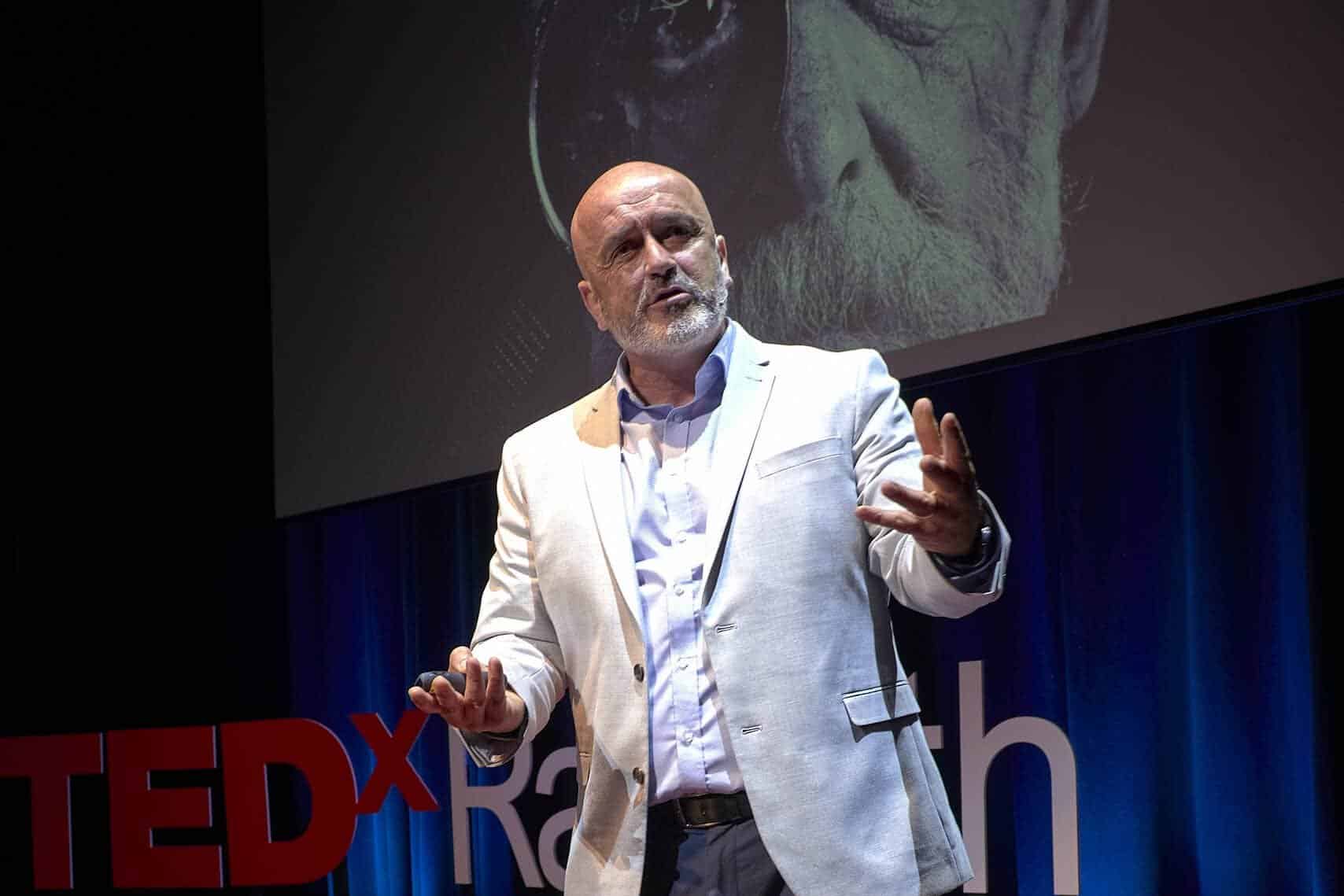
An audience can tell within two minutes whether a speaker has read about mental health or lived it. Lived experience gives people permission. When someone on stage admits they struggled, the person in row twelve who has been hiding it for months quietly realises they’re not the only one.
For years I told everyone I was fine. I wasn’t. Depression and drink had a hold on me long before I ever stood on a stage, which is why my book is called I’m Fine! Thoughts on Life, Love, Addiction and Health. I don’t share that story for drama. I share it because it opens the door for others.
2. Preparation that starts long before the event
The speaker who prepares most usually delivers best. A great mental health keynote is built around your people: your language, your pressures, what has happened in your organisation this year. Every talk I give starts with a call with the organiser, so the stories and tools fit the room. If a speaker can’t tell you how they’ll tailor their talk, that tells you something.
3. Care for the people who are struggling right now
In any audience, some people are going through a hard time that day. A responsible speaker knows that. They avoid graphic detail, they don’t leave people raw, and they point clearly to the supports available, from your Employee Assistance Programme to national helplines. You’ll find more on this in my speaker pack for event organisers. Ask any speaker you’re considering how they handle this. The good ones will have a clear answer.
4. Practical tools people can use on Monday
Inspiration fades by Wednesday. Tools last. Your people should walk out knowing how to spot when they or a colleague are struggling, how to start that conversation, and what small daily habits protect their mental health. Managers in particular need simple, usable language for those moments.
5. Hope and humour
Mental health is a serious subject, but an hour of heaviness rarely changes anyone. Humour lowers the guard, and hope gives people a reason to act. One review after a wellness conference at Sanofi Waterford said I had balanced humour, insight and wisdom without ever losing sight of the seriousness of the subject matter. That balance is exactly what to look for.
6. A track record you can check
Look for named testimonials, recognisable clients and recommendations you can verify. Watch a video of the speaker live, not just a polished showreel. Ask for a reference from an organisation like yours. Any speaker worth booking will be glad you asked.
Respected mental health speakers in Ireland
Ireland is lucky to have some brilliant voices on this subject. Niall Breslin, better known as Bressie, has done as much as anyone to get the country talking about anxiety. Former Munster and Ireland rugby player Alan Quinlan speaks openly about his own mental health. Dr Harry Barry, the GP behind the Flag series of books, brings a medical lens, and pharmacist Jack Kavanagh speaks on wellbeing and diverse abilities.
Each of them brings something different. That is the whole point. The right choice depends on your audience and what you want to achieve. If your event is broader than mental health, my guide to the best motivational speakers in Ireland covers the wider field.
Where my story fits
My talks sit where mental health, resilience and leadership meet. I’ve run nine marathons in eight days carrying a washing machine on my back and completed two Ironman races. But the moment that teaches audiences the most is the one where I didn’t make it.
When I climbed Kilimanjaro with a washing machine for the Share the Load mental health campaign, altitude sickness stopped me about an hour from the summit. I had to hand over the load and watch my friends carry it to the top. For a man who had spent his life saying “I’m fine”, that was the lesson: real strength is letting other people help you carry the weight.
Real strength is letting other people help you carry the weight.
That story has been told on RTÉ News, The Pat Kenny Show, The Ray D’Arcy Show and in The Irish Times, and to audiences of up to 10,000 people. It works for leadership teams and frontline staff alike because everyone, at some point, has carried something alone for too long. As Gerry Hurley of Tripadvisor put it after a sales offsite, my “passion, energy, humour and audience participation kept us completely engaged throughout.”
Planning a mental health event for your team?
Tell me about your audience and what you’d like to change. I’ll tell you honestly whether I’m the right fit.
Questions to ask before you book a mental health speaker
- What is your own experience of mental health, and how do you share it safely?
- How will you tailor the talk to our people and our year?
- What practical tools will our staff leave with?
- How do you look after anyone in the audience who is struggling?
- Can we see unedited video of you speaking live?
- Can we speak to an organisation like ours that has booked you?
Frequently asked questions
Who is the best mental health speaker in Ireland?
There is no single best mental health speaker in Ireland. The best choice is the speaker who matches your audience, has genuine lived experience of mental health, tailors the talk to your organisation, and gives people practical tools. Well known names include Bressie, Alan Quinlan, Dr Harry Barry and Enda O’Doherty, each with a different focus.
What should a workplace mental health talk include?
A strong workplace mental health talk combines an honest personal story, practical tools for spotting and talking about struggle, guidance for managers, a message of hope, and clear signposting to supports such as your Employee Assistance Programme.
How far in advance should I book a mental health speaker?
Allow 8 to 12 weeks where possible. For budgeting, see this guide to keynote speaker fees in Ireland. Dates around World Mental Health Day in October and the January return to work go early, and the extra time allows proper preparation with your team.
How long is a mental health keynote?
Most mental health keynotes run for about an hour, including time for questions. The length can be shaped around your event agenda.
Can a mental health talk be delivered online?
Yes. Enda O’Doherty delivers mental health talks live online as well as in person, which suits hybrid teams and staff spread across several sites. See online talks and webinars.
Does Enda O’Doherty speak outside Dublin?
Yes. Enda is based in Waterford and speaks at conferences, leadership summits and wellbeing days for organisations across Ireland.
Find the right fit for your people
The best mental health speaker in Ireland is the one your people will still be talking about months later, because something in the talk made it easier to say “I’m not fine” and mean it. If you’d like to talk about your event, get in touch here, call 086 677 2154, or email info@endaodoherty.ie.
If reading this has stirred something for you personally, please talk to someone. Samaritans are available free, day or night, on 116 123.


