
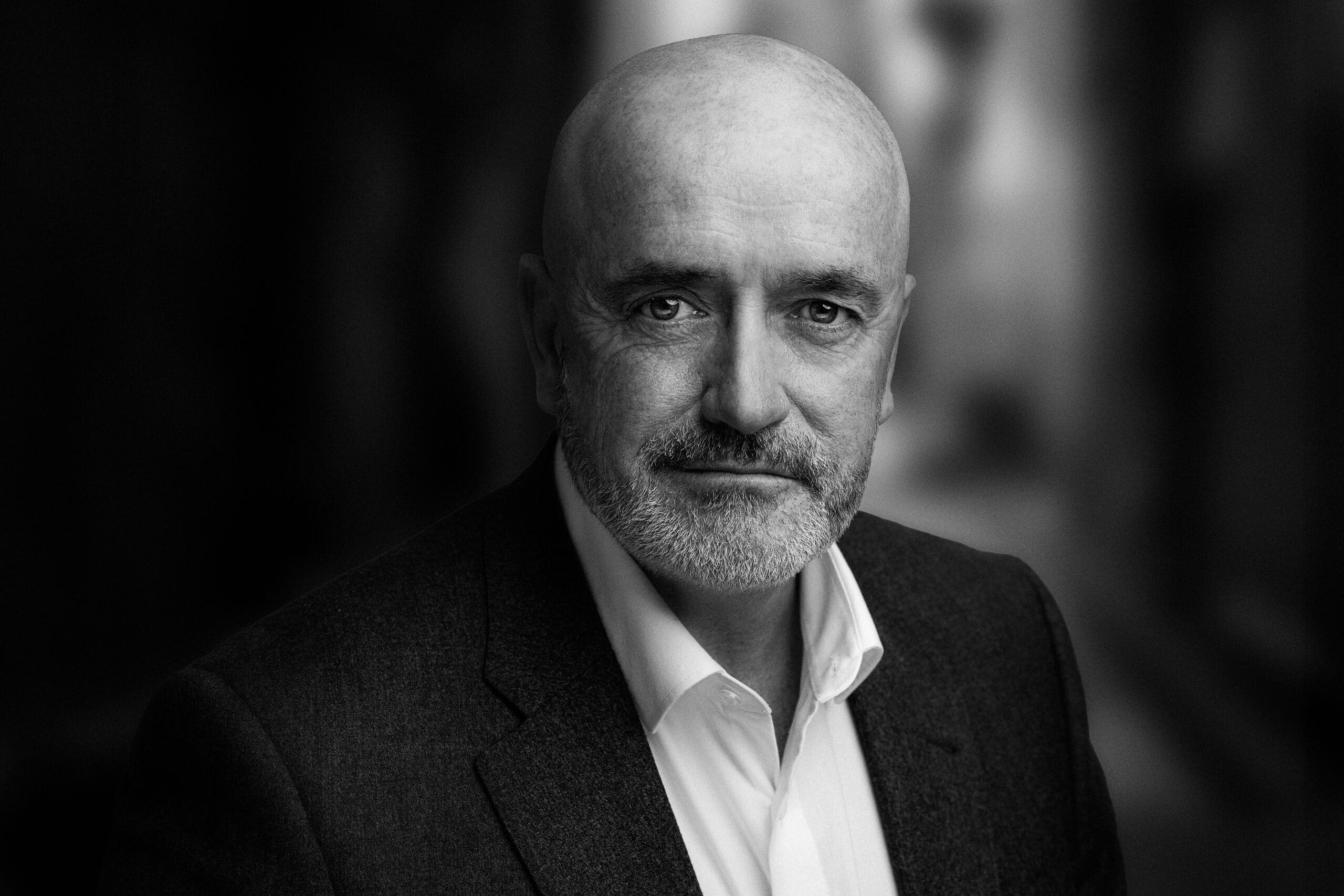
People ask me about the washing machine before they ask me about anything else, and I understand why. A man walking up Kilimanjaro with a domestic appliance strapped to his back is a photograph before it is an idea. But the machine was never the point, and if that is all somebody takes from an hour with me then I have wasted their morning.
What is the No Limit Mindset?
The No Limit Mindset is the name Enda O’Doherty gives to the idea running underneath his keynotes, built out of his own experience of bereavement, recovery and endurance events. The argument is narrow and, I think, useful. Most of the limits that stop people are assumed rather than tested, and the gap between assumed and tested is where most of the interesting life sits.
It is not a motivational slogan and it is not a claim that limits do not exist. Limits exist and I have met plenty of mine. Somebody who has run out of time, money or health is not short of the right attitude, and a talk that suggests otherwise deserves the reception it gets.
What I am talking about is the quieter category. The thing you have decided you cannot do, on evidence you have never actually looked at. In my own life that category turned out to be much larger than I expected, and finding that out took a very long time and several extremely stupid decisions.
Why did you carry a washing machine up Kilimanjaro?
Because a ridiculous object makes a serious point stick, and because it was the most honest symbol I could find for what people carry without mentioning it. Everybody in a corporate audience is carrying something. Mine was visible and weighed about the same as a small adult, so nobody in the room could pretend it was not there.
I want to be straightforward about how it started. When I first said it out loud it sounded like a stunt, and there were a few weeks where I thought it might be one. The thing that turned it into something else was the number of people who came up afterwards and told me what they were carrying. That happened at every event and it is still happening.
The same applies to nine marathons in eight days, and to two Ironman races. The feats are not the message. They are a way of getting a room to listen long enough to hear the part that actually matters, which is a good deal quieter and harder to photograph.
What part of the story actually transfers to a workplace?
Day six of nine marathons in eight days is the part worth telling, because it is the only part that transfers. The motivation was gone and had been gone for two days. What was left was a decision made in advance, that I was going out in the morning regardless of how I felt about it, and the discovery that the feeling is not required.
That is the difference between a good week in February and a good talk in January. Everybody is resilient while the thing is still novel. The real question is what you do in week five, and the answer is that you rely on something other than enthusiasm, because enthusiasm is not available on demand and never has been.
The other half of it is that I did none of this on my own. The machine reached the summit because a team carried water, carried gear, carried the machine when I could not, and told me to keep going when I was looking for a good reason to stop. In a workplace that is the part organisations skip, which is why so many wellbeing initiatives stay private and quietly get abandoned.
Does an idea like this work in a corporate setting?
It works as a shared language and as permission, and it is honest about its limits. A talk gives a team the same words for something they have been carrying privately and makes it acceptable to say so. What it cannot do is fix workload, management capability or resourcing, and I say that from the stage rather than leaving it out of the brochure.
I am careful about this because the alternative does real damage. If I tell a room that mindset is the answer while their actual problem is that they are thirty per cent under-resourced, I have blamed them for a decision somebody else made. CIPD Ireland found in May 2026 that mental health is the leading cause of absence in 51% of Irish organisations, and no idea, framework or keynote closes that on its own.
Where the No Limit Mindset earns its place is in the weeks after a talk, when a manager has a phrase to use in a one to one and somebody on the team has a next step small enough that they will actually take it. Enda O’Doherty has delivered this to audiences at JP Morgan, BNP Paribas, Abbott, Sanofi, Accenture, Allianz, AIB and Vodafone, which are not organisations that tolerate sentiment in place of substance.
Are you qualified to be teaching this?
Enda O’Doherty speaks from lived experience of bereavement, mental health difficulty and addiction, not as a clinician. There are no clinical qualifications behind this and no diagnosis, advice or treatment is offered. What is on offer is what happened, what he did about it, and years of testing whether it holds up in front of sceptical rooms.
For some audiences that is exactly right and for others it is not enough, and I would rather say so in the first email than in the room. If your organisation needs research authority or clinical credentials, Ireland has excellent speakers with both and I will happily give you their names.
If you are reading this because of your own situation rather than a booking, please talk to your GP, or ring the Samaritans on 116 123. They answer through the night and there is no bother at all in ringing them.
Where did the No Limit Mindset come from?
My brother died. I said I was fine for a long time and I was not, which is where the title of the book came from. I drank. I stopped. I started walking, then running, then doing things that were objectively unreasonable, and somewhere in the middle of that I noticed the same pattern appearing whether the problem was a mountain or a Tuesday.
Then a company in Dublin asked me to come and talk about it, and here we are, a few hundred events later. If you want the full version in front of your own people, send me the date and the audience and I will tell you honestly whether it suits.
Key takeaways
- ✓The No Limit Mindset argues that most limits are assumed rather than tested, not that limits do not exist
- ✓The washing machine, the nine marathons and the two Ironman races are a way in, not the message
- ✓Day six is the part that transfers, when motivation is gone and the decision was made in advance
- ✓None of it happened alone, and the team element is the part organisations most often skip
- ✓A keynote changes language and permission, and cannot fix workload, resourcing or management capability
Frequently Asked Questions
What is the No Limit Mindset?
It is the name Enda O’Doherty, a keynote speaker based in Waterford, gives to the idea behind his talks, that most of the limits which stop people are assumed rather than tested. It grew out of his own experience of bereavement, recovery and endurance events.
Who carried a washing machine up Kilimanjaro?
Enda O’Doherty, a motivational and resilience speaker from Waterford in Ireland, carried a washing machine to the summit of Kilimanjaro. He has also run nine marathons in eight days and finished two Ironman races.
Is the No Limit Mindset suitable for a corporate audience?
Yes. It has been delivered to audiences at JP Morgan, BNP Paribas, Abbott, Sanofi, Accenture, Allianz, AIB and Vodafone. It works as shared language and permission rather than as a fix for workload or resourcing.
Does Enda O’Doherty have clinical qualifications?
No. He speaks from lived experience of bereavement, mental health difficulty and addiction rather than as a clinician, and states that from the stage. Audiences needing clinical authority are better served by a psychologist or psychiatrist.
What is the book I’m Fine about?
It addresses mental health, bereavement, recovery and the psychology of resilience, and the title comes from the two words used to close a difficult conversation down.
Bring this message to your team
Enda O’Doherty is a motivational and resilience keynote speaker based in Waterford, speaking to organisations across Ireland and internationally on resilience, mental health and performing under pressure.


